Brain Regions
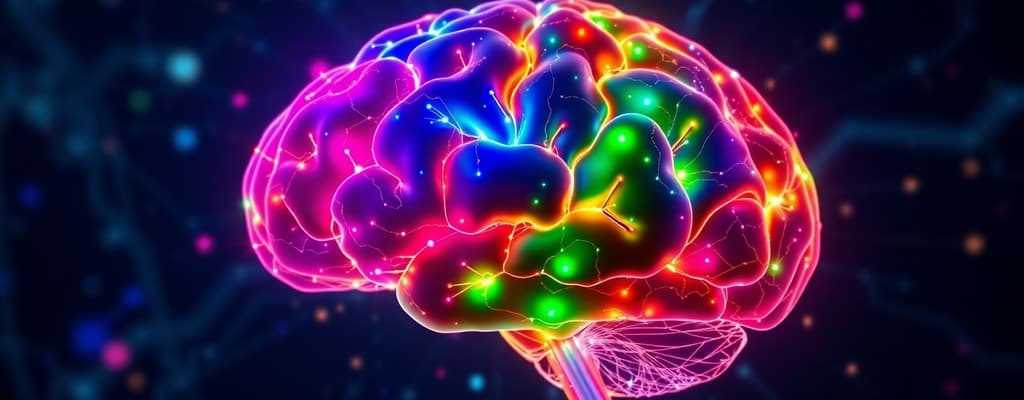
Biology of Neural Networks
Brain Regions - Why Your Brain Has Different Rooms
Your brain is not one big uniform blob. If you look at a real brain, you'll see that it's divided into distinct regions. The visual cortex at the back handles sight. The auditory cortex on the sides handles sound. The hippocampus deep inside handles memory. The cerebellum at the bottom handles coordination and balance.
Every region is a specialist. Your brain doesn't use the same wiring to see, hear, and remember. It has evolved specialized tools for specialized jobs.
Deep learning is exactly the same. There is no single architecture that does everything well. You wouldn't use a hammer to screw in a nail, and you wouldn't use a CNN to process text. Different problems need different architectures.
Let's take a tour of the brain regions of AI.
The Visual Cortex - CNN (Convolutional Neural Networks)
Your visual cortex sits at the back of your head, in the occipital lobe. It takes raw signals from your eyes and turns them into meaningful perception. It does this in a very specific way, layer by layer.
Layer 1: Simple cells detect basic features. Edges. Lines. Corners. Orientations. "There is a vertical line here."
Layer 2: Complex cells detect patterns of simple features. Shapes. Curves. "There is a circle made of curved lines."
Layer 3: Higher level cells detect meaningful combinations. "That looks like an eye. That looks like a wheel."
Layer 4: Object recognition. "That is a face. That is a car. That is a cat."
This layered approach is so effective that AI copied it entirely.
Convolutional Neural Networks (CNNs) do exactly what your visual cortex does. They use filters that slide across the image, detecting patterns at every level of abstraction.
Let's break down how a CNN really works:
Convolution: A small filter (like 3x3 pixels) slides across the entire image. At each position, it checks: "Does this pattern match what I'm looking for?" If yes, it produces a high response. If no, low response.
Pooling: The image gets compressed. Important features are kept. Less important detail is discarded. This makes the network more efficient and less sensitive to exact positions.
Stacking layers: Layer 1 detects edges. Layer 2 detects shapes from edges. Layer 3 detects objects from shapes. Each layer builds on the previous one.
Before CNNs, computers were terrible at recognizing images. They would look at each pixel individually, completely missing the big picture. CNNs changed everything.
Aaj jo bhi face unlock aap apne phone mein use karte ho, woh CNN ki wajah se possible hai. Jab aap apna phone unlock karte ho, ek CNN aapke face ka analysis karta hai. Edges check karta hai. Features check karta hai. Aur decide karta hai, "Haan, yeh owner hai."
The Auditory Cortex and Temporal Lobe - RNN and LSTM
Your temporal lobe handles sequences. Music. Speech. Memory. Things that happen one after another over time. Your auditory cortex (inside the temporal lobe) processes sound as a sequence of events.
Recurrent Neural Networks (RNNs) handle sequences too. The key innovation is a loop. The output from the previous step is fed back into the network as input for the current step.
Think of it like this. You're reading a sentence. You don't forget the first word when you reach the last word. You keep a running context in your head. RNNs try to do the same thing. They maintain a "hidden state" that carries information from step to step.
But RNNs have a serious problem. They forget.
If a sentence is long, by the time the RNN reaches the end, it has forgotten the beginning. This is called the vanishing gradient problem. The signals from early steps get weaker and weaker as they travel through time, until they effectively disappear.
LSTMs (Long Short Term Memory) were invented in 1997 to fix this problem. An LSTM has special structures called gates:
- Forget gate: Decides what information to throw away
- Input gate: Decides what new information to store
- Output gate: Decides what information to output
These gates act like a filing system. The LSTM can decide: "This information is important, I'll keep it for later." Or: "This information is irrelevant, I'll forget it."
GRUs (Gated Recurrent Units) are a simplified version of LSTMs. Fewer gates, faster computation, almost as good.
RNNs and LSTMs are used for:
- Speech recognition
- Music generation
- Stock market prediction
- Weather forecasting
- Any problem where time matters
Ek RNN uss dost ke jaise hai jo baat karte karte bhool jaata hai ki topic kya tha. LSTM uss dost ke jaise hai jo har detail yaad rakhta hai, including that embarrassing thing you said in 2017.
The Prefrontal Cortex - Transformers
Your prefrontal cortex, right behind your forehead, is what makes you human. It handles complex reasoning, planning, decision making, social behavior, and personality. It's the CEO of your brain.
In deep learning, the closest equivalent is the Transformer. Introduced in 2017 in a paper titled "Attention Is All You Need," the Transformer changed everything.
Before Transformers, RNNs were the standard for language processing. They worked, but they were slow and forgetful.
The Transformer did something radical. Instead of processing one word at a time, it processes the entire sequence at once. And instead of maintaining a hidden state, it uses attention.
How attention works:
Every word in a sentence produces a query, a key, and a value.
- The query is: "What information am I looking for?"
- The key is: "What information do I have?"
- The value is: "Here is my actual content."
Every word compares its query against every other word's key. If there's a match, attention is paid. The values of matching words are combined. This happens for every word simultaneously.
Let's take an example: "The cat sat on the mat because it was tired."
When the model processes the word "it," the attention mechanism asks: "Who does 'it' refer to?" It looks at "cat" and finds a match. "It" = "cat." The model knows that "it was tired" means "the cat was tired," not "the mat was tired."
Self-attention is when every word in a sentence pays attention to every other word in the same sentence. This gives the model complete context.
Multi-head attention runs multiple attention operations in parallel. Each "head" can focus on different types of relationships (grammatical, semantic, positional, etc.).
Transformers power every major AI language model today:
- ChatGPT (GPT stands for Generative Pre-trained Transformer)
- Google's Gemini
- Anthropic's Claude
- Meta's Llama
- GitHub Copilot
Agar aapne kabhi bhi ChatGPT se baat ki hai, toh aapne Transformer se baat ki hai. Woh Transformer hai jo aapke sawaal ko samajh raha hai. Woh Transformer hai jo jawab generate kar raha hai. Har ek word jo ChatGPT likhta hai, woh Transformer ki wajah se likha ja raha hai.
The Basal Ganglia - Reinforcement Learning
Your basal ganglia sits deep inside your brain and handles habit formation, movement selection, and reward-based learning. When you learn to ride a bike, your basal ganglia is doing the heavy lifting.
Reinforcement Learning (RL) is the AI equivalent. The model (called an "agent") takes actions in an environment and gets rewards or punishments.
The RL Loop:
- Observe the current state
- Choose an action
- Take the action
- Receive a reward (or penalty)
- Learn from the outcome
- Repeat
This is how AI learned to play chess, Go, and video games at superhuman levels.
DeepMind's AlphaGo used reinforcement learning. It played millions of games against itself. Every win was a reward. Every loss was a punishment. Over time, it discovered strategies that no human had ever thought of.
Key concepts in RL:
- Exploration vs Exploitation: Should the agent try new things (explore) or stick with what works (exploit)?
- Reward shaping: How to design rewards that lead to the desired behavior
- Credit assignment problem: Which action in a long sequence led to the reward?
Reinforcement learning waise hi hai jaise aap apne dog ko training dete ho. Jab dog aacha kaam karta hai, treat dete ho. Jab galat karta hai, ignore karte ho. Dheere dheere, dog seekh jaata hai ki kaunsa kaam treat laata hai. RL mein bhi yahi hota hai, bas dog ki jagah computer hai.
The Motor Cortex and Cerebellum - Generative Models
Your motor cortex controls voluntary movement. Your cerebellum coordinates fine motor skills and balance. Together, they take a thought and turn it into action.
"Main apna haath uthaana chahta hoon." And your hand goes up.
Generative models do the same thing with data. They take a prompt (a thought) and generate output (an action).
Types of generative models:
GANs (Generative Adversarial Networks): Two networks in a fight. The Generator creates fake data. The Discriminator tries to catch fakes. They compete. Both get better. This is how deepfakes work.
VAEs (Variational Autoencoders): Compress data into a compact representation, then reconstruct it. Used for generating variations of existing data.
Diffusion Models: Start with pure noise. Gradually remove noise to reveal a clear image. This is what Stable Diffusion and Midjourney use. You give it text, it generates an image by starting with random static and slowly cleaning it up.
Autoregressive Models: Predict the next token (word, pixel, etc.) based on all previous tokens. This is what GPT does. Given "The cat sat on the," predict "mat."
The Hippocampus - Memory-Augmented Networks
Your hippocampus is the memory index of your brain. It doesn't store memories itself, but it points to where memories are stored in the neocortex. When you want to remember something, your hippocampus activates the relevant neocortical patterns.
Memory-Augmented Neural Networks use external memory banks that the model can read from and write to. This gives the model a scratchpad for storing and retrieving information during a task.
The most practical example is RAG (Retrieval Augmented Generation) . The model has access to a searchable database. When you ask a question, it searches the database, finds relevant information, reads it, and then answers.
This is like giving a student access to their notes during an exam. They don't have to remember everything. They just need to know how to find the right information.
The Whole Brain - All Regions Together
Here is the important thing. Your brain never uses just one region. Every thought, every action, every feeling involves multiple regions talking to each other at the same time.
You see a friend (visual cortex), recognize their face (temporal lobe), remember their name (hippocampus), feel happy (limbic system), wave your hand (motor cortex), and say "Hey, how have you been?" (Broca's area for speech).
All at once. In parallel. Effortlessly.
Modern AI systems work the same way. Real world applications use multiple architectures together:
- Self-driving cars: CNN (vision) + Transformer (temporal understanding) + Reinforcement Learning (decision making)
- Voice assistants: CNN (audio processing) + Transformer (language understanding) + Generative model (response generation)
- Medical diagnosis: CNN (scan analysis) + RNN (patient history) + Classifier (diagnosis)
- Game AI: CNN (if the game has visuals) + Reinforcement Learning (strategy) + Transformer (planning)
The architecture depends entirely on the problem. That is the whole point.
Comparison Table
| Brain Region | AI Equivalent | Best At | Real World Use |
|---|---|---|---|
| Visual Cortex | CNN | Images, video | Face unlock, self-driving, medical scans |
| Temporal Lobe | RNN / LSTM | Sequences, time series | Speech, music, stock market |
| Prefrontal Cortex | Transformer | Language, reasoning | ChatGPT, translation, coding |
| Motor Cortex | Generative Models | Creating, output | Midjourney, DALL-E, GPT |
| Basal Ganglia | Reinforcement Learning | Decisions, habits | Game AI, robotics |
| Hippocampus | Memory Networks | Fact retrieval | RAG, question answering |
| Cerebellum | Normalization Layers | Coordination, balance | Stable training, fine-tuning |
The Big Lesson
Your brain is a toolbox. You don't use a hammer to cut wood. You don't use a saw to drive nails. Each tool has a purpose.
Same with AI. CNN for images. RNN for sequences. Transformer for language. Reinforcement Learning for decisions. Generative models for creation.
The smartest systems don't use just one architecture. They combine them. Just like your brain uses all its regions together to make you who you are.
A brain that only uses one region is barely alive. A neural network that only uses one architecture is barely useful. Diversity isn't just nice. It's necessary.